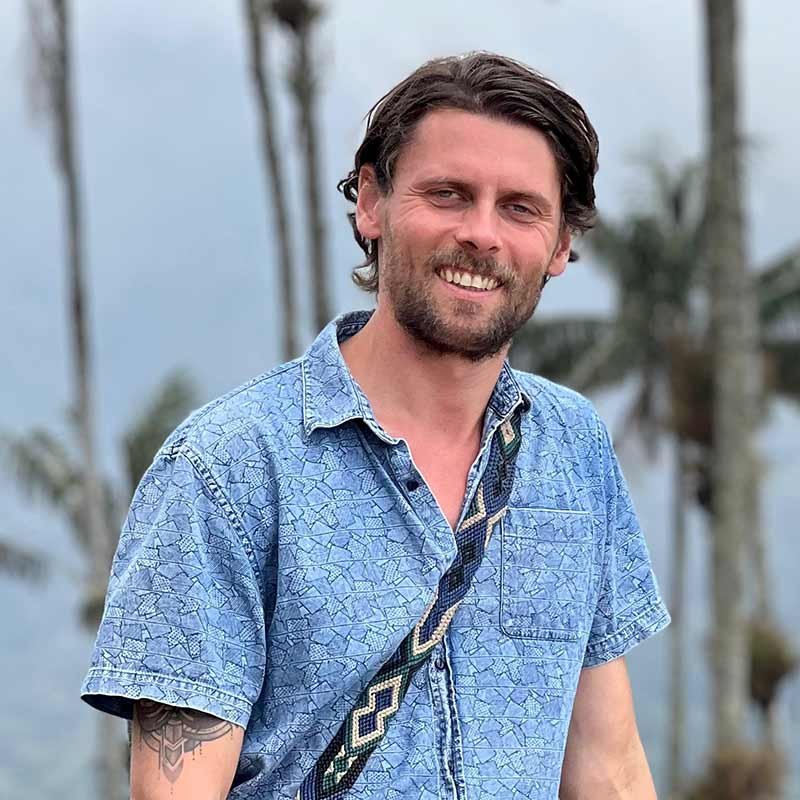

My journey into shamanic healing started years ago, driven by the desire to step deeper into my personal growth. Since then, I have worked in multiple medicine communities across South America and spent time in many more. Wachuma (also known as San Pedro) has become one of my most cherished teachers along this path of inner discovery, and in my opinion, it doesn’t get the recognition it deserves.
Like many young adventurers with an appetite for self-discovery, my eyes were set on Ayahuasca when I first explored shamanic healing in South America. On the other hand, its Andean cousin, Wachuma, slipped under the radar.
Despite being such a revered teacher plant used within Andean communities for millennia, Ayahuasca was the one making a buzz in news headlines, capturing global attention, and reigniting interest in shamanic traditions.
Perhaps Wachuma never stepped into the global spotlight because it doesn’t plunge you into the depths of your subconscious as Ayahuasca does. Instead, like a loving father, it takes your hand and guides you into the heart.
Nowadays, it seems that this powerful medicine is gaining traction in the Western world. As word spreads about the San Pedro cactus and its ability to illuminate the path forward, a growing number of people are seeking it out due to its gentler approach to self-discovery.
I’ve had the privilege to sit with Wachuma many times now, from participating in Wachumayus in the Peruvian highlands to sitting with the medicine deep in the Amazon rainforest.
Let me tell you, there’s a lot more to this cactus than what meets the eye.
In this Wachuma cactus guide, we’ll cover everything you need to know if you’re thinking about working with this consciousness-enhancing cactus and look at why a growing number of people are seeking it out.
What is Wachuma? The sacred cactus of the Andes
Wachuma (also spelt Huachuma) is a sacred cactus that has been an integral part of Andean shamanic tradition long before the rise of Western civilisation.
While Wachuma is the original Quechua name, this cactus also goes by San Pedro – the Spanish remodel associated with Saint Peter due to the Christian belief that it held the key to heaven.
Sacred plants that have deep cultural ties are known by many names: ancestral medicines, teacher plants, plant medicines, power plants, spirits…
Regardless, these plants share a very important function: to guide us toward universal truth.
In truth, the Wachuma is good for many things, but it’s often sought for guidance, healing, and to open the heart. In Andean tradition, it’s recognised as a grandfather who connects us to our ancestors and helps us step deeper into spirit.
While many believe that mescaline, the entheogenic molecule in the Wachuma cactus, is responsible for these powerful hallucinogenic experiences, the ancestors who worked with it had a different view – as do the Wachumeros today.
They believe the San Pedro cactus lowers the drawbridge to higher realms of consciousness. When we commune with the plant, we connect to its spirit. This is where the mystical experiences happen.
Whether you believe that the experiences people undergo are simply due to mescaline – a mind-altering chemical or whether there’s something more profound at play is something you need to explore yourself.
From my experiences, I believe there is certainly a spiritual element that can’t be explained through the Western mindset – through reason, logic, and research. After all, that’s not the language of these plants. They speak to us via intuition, wisdom, and a deeper sense of knowing.
Perhaps mescaline is the key that opens up our consciousness. But what lies within that foreign territory that’s so well guarded by the ego is the question we should be asking.
To me, at least, it has become apparent that Wachuma is a conscious, intelligent teacher, and it’s not until we seek an audience with him that we begin to see just how immense our consciousness is.
What are the spiritual benefits of the Wachuma cactus?
There’s a spiritual side to the Wachuma cactus that is often overlooked by the scientific community; however, it’s this perspective that has made it a gateway for transformation.
Ancestral medicines such as San Pedro are considered sacred due to their ability to lead us toward spiritual truth. Everything has a spirit, including every plant, animal, and person. When we commune with the San Pedro cactus, we connect with its spirit – the wise grandfather who guides us to truth.
As long as we listen to this teacher’s wisdom, he can guide us across this bridge where we can experience a greater sense of connection, unity, and oneness with the universe.
Imagine you’re a lonely neuron, swimming alone in a vast, empty space. We are part of this much bigger network of consciousness, but we can also feel so separate.
Communing with the Wachuma cactus is like forming a connection with the universal mind.
Suddenly, we get a glimpse at the intelligent architecture of our universe, the pulse that beats within every living thing, and feel like we’re a small gear in a much larger system called life.
This is what Wachuma does.
It might not make you feel like you’re flying, but it provides a cleaner, truer lens to view reality and oneself.
Wachuma deepens your connection to the spirit
Wachuma benefits us on all levels of our lives because it addresses the core layers of who we are. Your perception of life is a reflection of the deeper workings of your consciousness, and if the roots are rotten, the tree can only grow so tall.
If you imagine your consciousness as a projector and life as the projection where the lens is covered in dirt, so is your reality. This is why some people seem to be continuously drowning in problems and dealing with insurmountable obstacles: because their lens is dirty.
Wachuma cleans the lens.
Its magic lies in its ability to return us to a place of purity underneath all the residue we’ve packed on throughout our life experiences.
Whether you feel more connected to nature or have an experience with the divine, the cactus shows us how life should be lived when experienced through the lens of spirit.
This brings me to a very important distinction…
The San Pedro cactus isn’t altering your consciousness; it’s purifying it.
Rather than inducing spiritual episodes, imagine that the San Pedro cactus removes the filters blocking you from a higher expression of spirit. These filters come in the form of ego, conditioning, programs, and belief systems, like layers of dust covering the projector.
Therefore, it’s not accurate to say that San Pedro is revealing anything new; rather, it’s showing you the factory settings of consciousness: deeply in touch with spirit, grounded in the natural world, and connected with other people.
What are the Wachuma benefits?
There are many reasons why people seek out the Wachuma cactus, whether it’s for personal growth, healing, or spiritual guidance, which we’ll look at here. Some common Wachuma benefits include:
- Open the heart space and experience deeper expressions of joy
- Develop a deeper sense of purpose, direction, or meaning in life
- Receive guidance and clarity on your life path
- Address certain patterns, traumas, and recurrent themes in life
- Develop a deeper awareness of your unconscious programs
- Heal generational wounds
- Deepen your connection with your ancestors
- Connect more deeply with spirit and higher expressions of self
- Facilitating emotional healing and release
What I love about the Wachuma cactus is that it offers a stage. The way I see it is that Wachuma allows us to become the observer of our experiences and gives us perspective.
It doesn’t claim to solve your problems for you but rather gives you the space to work through them. While some medicines like Magic Mushrooms or Ayahuasca strap you onto a rollercoaster, Wachuma puts you on a raft and sets you downstream.
This gives you the space to reflect, introspect, and sit with yourself – often leading to powerful insights and understandings that can improve the quality of your life.
San Pedro helps us see life through a different lens. Wachuma benefits us by providing a better vantage point to view our life experiences and can help us:
- Identify emotional issues, barriers, and blockages
- Manually deconstruct belief systems or mindsets that no longer serve us
- Disarm our incessant thinking and find a sense of stability within oneself
The experience can be subtle, but it can also carry profound lessons.
This is a big reason why many people prefer the teachings of San Pedro because he doesn’t shout them at you. Rather, he whispers them, encouraging you to lean in and pay attention.
People seeking this teacher plant often do so intending to clear out the obstacles blocking the road between them and higher expressions of self.
Here’s the thing…
We are supposed to have beautiful lives; it’s our birthright.
However, life tends to get in the way, and before we know it, we’re bogged down with all this excess baggage, and life becomes a painful and convoluted process.

What are the San Pedro cactus psychedelic effects?
Mescaline is the entheogenic molecule in San Pedro that drives some of the psychedelic effects, but more importantly, we connect to the energy of the cactus – making us feel more connected to nature, the universe, and other people.
That isn’t to say that everyone has a euphoric experience. San Pedro can also be a tough teacher who sends us into spaces we don’t want to go, but must for our growth.
Some common San Pedro cactus psychedelic effects include the following:
- Deeper feelings of connectedness to the physical body
- Deeper emotional connections with other people
- Feelings of unity with the natural world and the universe
- A higher awareness of physical sensations
- Feelings of lightness or spaciousness in the body
- A general heart-opening effect leading to feelings of love, compassion, and gratitude
- Feelings of contentment and calm
- A sense of mental silence, stillness, and composure
- Feelings of mental spaciousness that encourage self-reflection
- Changes in thought patterns, mindsets, and belief systems
- Dream-like visuals or visions that lead you through memories or thought patterns
- Insights, epiphanies, and realisations
Often, people don’t seek out this medicine to undergo mind-blowing realisations or wild cosmic journeys. Instead, they listen to the subtle signals that help them navigate deeper into alignment with the heart.
Although there are common themes amongst the San Pedro cactus psychedelic effects, everyone tends to undergo unique experiences as the cactus speaks directly to each individual, tailored to the complexities of their life experiences.
This means there’s not really a one-size-fits-all approach when it comes to this medicine. It will show you what you need and provide guidance where it can.
With that said, the San Pedro cactus psychedelic effects are often mild. While the San Pedro cactus generally isn’t a highly visual medicine, people often experience subtle visuals that can take shape as waving or breathing effects on objects, the presence of patterns and sacred geometry, and seeing auras around things – which are almost always green in my experiences.
You may feel some nausea as Wachuma begins to take effect, and on occasion, it may lead to a purge – an energetic release.
This is a natural part of the process, and these feelings tend to subside as you settle into the journey, where it takes on a more expansive, spacey feeling.
What to expect during a Wachuma ceremony?
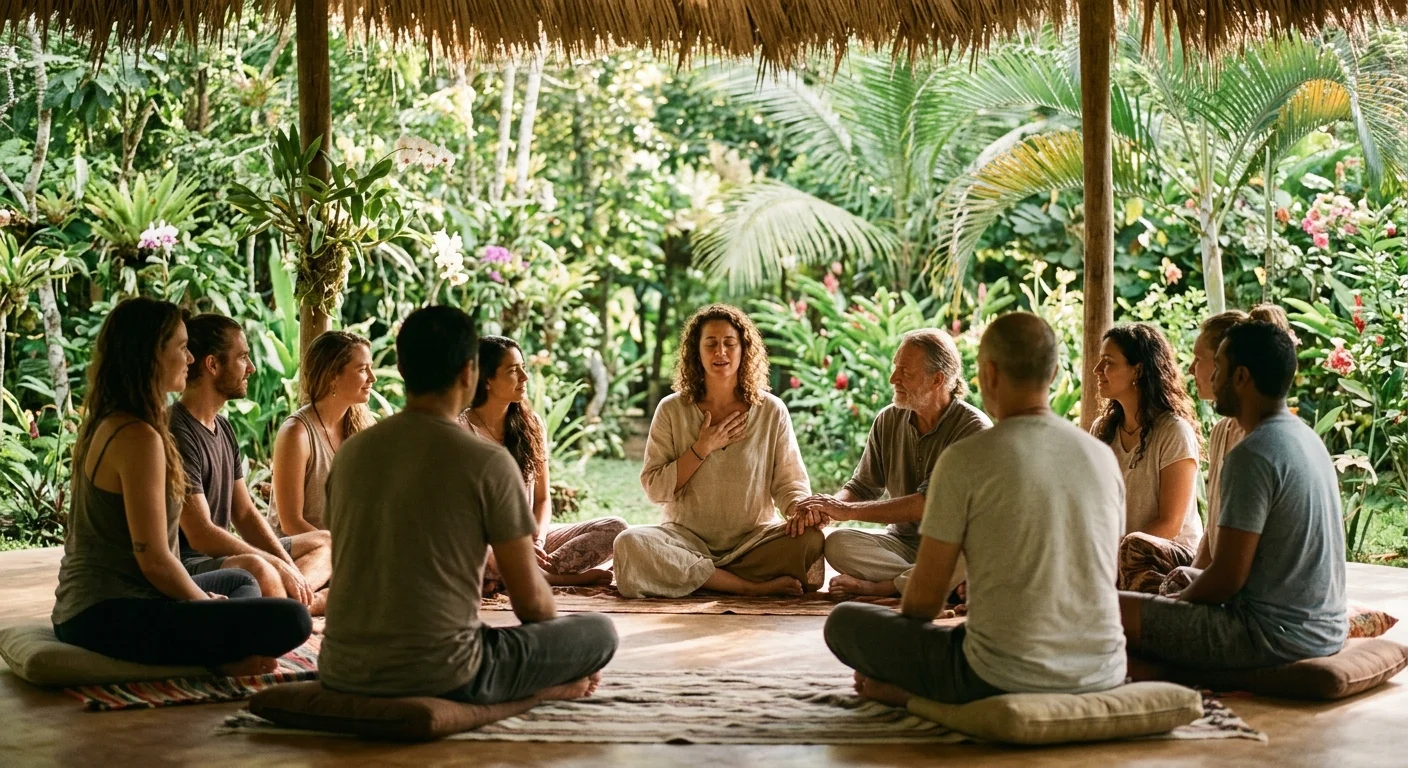
Even though there are usually overlapping themes, each Wachuma ceremony has its own identity and is run by different healers who may have studied different traditions. This gives each ceremony a unique personality, depending on where it’s held.
In one medicine community I spent some time in, the San Pedro ceremony took the form of a group therapy-type setting where each guest had an opportunity to sit in front of the sacred fire and seek counsel from the Wachumera.
Other ceremonies I have participated in were quite casual, where each guest had the time and space to take it at their own pace. Likewise, some ceremonies involved hikes to sacred places, temazcales (a traditional sweat lodge), and Wachumayus – dancing continuously from dusk to dawn during a solstice.
During a Wachuma ceremony, you are encouraged to sit with yourself as the medicine provides an opportunity to go inward. This tends to be a general rule of thumb for ceremonies.
Therefore, during a Wachuma ceremony, I suggest:
- Spending some time alone to process thoughts
- Meditating and focusing on the experience
- Focusing on your breathing and sensations
- Reflecting and engaging in inner dialogue
- Spending time in nature (if possible)
Often, the biggest breakthroughs happen when we give ourselves an audience and focus on the inner journey, void of distractions, stimuli, and conversations, as enjoyable as they may be.
Setting an intention during a Wachuma ceremony
It’s good practice to set an intention before working with the Wachuma cactus. While the cactus can help us step deeper into the true, unfiltered self, setting an intention acts as the compass.
By knowing what you’re looking for, Wachuma guides you in that direction and helps you find it. Without a compass, you may still have a beautiful experience, but it may just be that – an experience.
Imagine booking a session with a counsellor. Upon being asked why you’re seeking counsel, you tell him that you have no idea. With some skill, he may be able to get to the bottom of it, but it’s not a very efficient process.
Seeking counsel with Wachuma is quite similar.
After all, San Pedro is a teacher, and you’re seeking his counsel to be taught something. This is why it’s important to know why you’re seeking the wisdom of the cactus so that he can most efficiently guide you in the right direction.
Where to find a Wachuma retreat?
More Ayahuasca retreat centres these days are incorporating the use of Wachuma to create a complementary balance between the nurturing mother energy – Ayahuasca, and the guiding father energy, Wachuma.
Participating in a Wachuma retreat is an excellent alternative to an Ayahuasca retreat and perhaps more suitable for people who are looking for a more gentle experience.
If you’re looking for a Wachuma retreat in Europe, Avalon offers beautiful retreats incorporating both San Pedro and Ayahuasca, led by experienced shamans from South America. This is a great place to experience the magic of these medicines without having to travel halfway around the world to do so.
I do believe that Wachuma, like many other teacher plants, is an essential key in helping transform humanity as a whole.
As we embrace these traditions and seek guidance from our wise cactus teachers, we will step deeper into our collective evolution with the guidance of those who walked before us.
In my eyes, based on the many times I’ve worked with Wachuma, consulting with this wise teacher can be a life-changing experience as long as you listen to its whispers, implement its teachings, and continue to seek a deeper connection with its spirit.
If you have doubts or questions about the Wachuma retreats with Avalon, book a call with us here. It is our purpose to accompany you in your transformation and healing journey.